
The book of Hebrews is a letter to Jewish Christians written by a Greek. Some believe the purpose of this letter was to prevent Jewish Christians from going back under the law of Moses. The main reason for this letter was because these Christian Jews were facing a danger that many believers still face today―the struggle with sin:
In your struggle against sin, you have not yet resisted to the point of shedding your blood. (Hebrews 12:4)
The Hebrews, the Christian Jews, were struggling with sin, disobedience, and spiritual weakness. The author warns the Hebrews not to have a wicked heart of unbelief:
12 See to it, brothers, that none of you has a wicked heart of unbelief that turns away from the living God. 13 But exhort one another daily, as long as it is called today, so that none of you may be hardened by sin’s deceitfulness. (Hebrews 3:12-13)
In chapter 4, the Hebrews are further warned not to be hardened by the deceitfulness of sin:
Since, then, it remains for some to enter His rest, and since those who formerly heard the good news did not enter because of their disobedience, (Hebrews 4:6)
From this scripture, we can see there was disobedience among those who had heard the good news (the gospel) and didn’t enter into God’s rest. Let’s go to chapter 5:
11 We have much to say about this, but it is hard to explain, because you are dull of hearing. 12 Although by this time you ought to be teachers, you need someone to reteach you the basic principles of God’s word. You need milk, not solid food! 13 For everyone who lives on milk is still an infant, inexperienced in the message of righteousness. 14 But solid food is for the mature, who by constant use have trained their senses to distinguish good from evil. (Hebrews 5:11-14)
This letter of exhortation was because the Christian Jews were becoming spiritually weak or “dull of hearing.” Nothing is said about the Jews reverting back to the law of Moses, but we can’t rule it out. In the following scripture, the author tells the Hebrews to think of what Jesus endured so they won’t lose heart:
Consider Him who endured such hostility from sinners, so that you will not grow weary and lose heart. (Hebrews 12:3)
The Hebrews weren’t in danger of going back under the law of Moses, they were in danger of going back into slavery of sin and death.
I urge you, brothers, to bear with my word of exhortation, for I have only written to you briefly. (Hebrews 13:22)
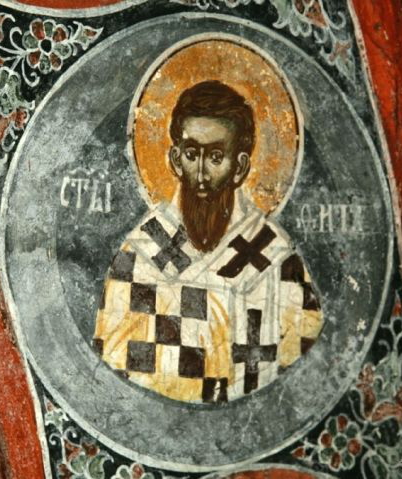
So, who wrote this ‘brief’ word of exhortation to the Hebrews? The apostle Paul would have every right to be proud of his disciple Titus. With faith from God, evidence from Paul’s epistles, comparing scripture to scripture, and deductive reasoning, we can conclude this letter was written by Titus. Let’s begin by looking at the following scripture:
how shall we escape if we ignore so great a salvation? This salvation, which was first announced by the Lord, was confirmed to us by those who heard him (Hebrews 2:3)
The author of Hebrews says that salvation was confirmed to “us” by “those” who heard Jesus. We know that the apostles heard Jesus, and this includes Paul. So, the writer has to be a disciple of one of the apostles, and because of the similarities to Paul, the author of Hebrews is a disciple of Paul. We can rule out Timothy as the author because he is called brother in Hebrews 13:23. Titus was a Greek, and he refers to the recipients of this letter as brothers.
The letter to the Hebrews is an example of how God turns the tables from a Jew exhorting Gentiles to a Gentile exhorting Jews, and he uses Titus to do this. This was done purposely by the Holy Spirit. Now let’s look at some comparisons between the apostle Paul and the author of Hebrews:
COMPARISON 1―Milk to Solid Food
Here’s Paul:
I gave you milk, not solid food, for you were not yet ready for solid food. In fact, you are still not ready, (1 Corinthians 3:2)
Here’s Titus:
For everyone who lives on milk is still an infant, inexperienced in the message of righteousness. (Hebrews 5:13)
COMPARISON 2―God Doesn’t Lie
Here’s Paul:
in the hope of eternal life, which God, who cannot lie, promised before time began. (Titus 1:2)
Here’s Titus:
Thus, by two unchangeable things in which it is impossible for God to lie, we who have fled to take hold of the hope set before us may be strongly encouraged. (Hebrews 6:18; see Numbers 23:19)
COMPARISON 3―Running the Race
Here’s Paul:
Do you not know that in a race all the runners run, but only one receives the prize? Run in such a way as to take the prize. (1 Corinthians 9:24; see also Galatians 2:2-3)
Here’s Titus:
Therefore, since we are surrounded by such a great cloud of witnesses, let us throw off every encumbrance and the sin that so easily entangles, and let us run with endurance the race set out for us. (Hebrews 12:1)
COMPARISON 4―Submitting to the Authorities
Here’s Paul:
Everyone must submit himself to the governing authorities, for there is no authority except that which is from God. The authorities that exist have been appointed by God. (Romans 13:1)
Here’s Titus:
Obey your leaders and submit to them, for they watch over your souls as those who must give an account. To this end, allow them to lead with joy and not with grief, for that would be of no advantage to you. (Hebrews 13:17; see 1 Timothy 2:1-2)
COMPARISON 5―Psalm 2:7
Here’s Paul:
He has fulfilled for us, their children, by raising up Jesus. As it is written in the second Psalm: ‘You are My Son; today I have become Your Father.’ (Acts 13:33)
Here’s Titus:
For to which of the angels did God ever say: “You are My Son; today I have become Your Father”? Or again: “I will be His Father, and He will be My Son”? (Hebrews 1:5)
COMPARISON 6―Longing for Jesus’s Appearing
Here’s Paul:
From now on the crown of righteousness is laid up for me, which the Lord, the righteous judge, will award to me on that day—and not only to me, but to all who crave His appearing. (2 Timothy 4:8)
Here’s Titus:
so also Christ was offered once to bear the sins of many; and He will appear a second time, not to bear sin, but to bring salvation to those who eagerly await Him. (Hebrews 9:28)
COMPARISON 7―A Knowledge of the Truth
Here’s Paul:
This is good and pleasing in the sight of God our Savior, who desires all men to be saved and to come to the knowledge of the truth. (1 Timothy 2:3-4; see also 2 Timothy 2:25, 3:7 and Titus 1:1)
Here’s Titus:
If we deliberately go on sinning after we have received the knowledge of the truth, no further sacrifice for sins remains, (Hebrews 10:26)
COMPARISON 8―Being Content
Here’s Paul:
But if we have food and clothing, we will be content with these. (1 Timothy 6:8)
Here’s Titus:
Keep your lives free from the love of money and be content with what you have, for God has said: “Never will I leave you, never will I forsake you.” (Hebrews 13:5)
COMPARISON 9―Deuteronomy 32:35
Here’s Paul:
Do not avenge yourselves, beloved, but leave room for God’s wrath. For it is written: “Vengeance is Mine; I will repay, says the Lord.” (Romans 12:19)
Here’s Titus:
For we know Him who said, “Vengeance is Mine; I will repay,” and again, “The Lord will judge His people.” (Hebrews 10:30)
COMPARISON 10―Gifts According to God’s Will
Here’s Paul:
But one and the same Spirit works all these things, distributing to each one individually just as He wills (1 Corinthians 12:11)
Here’s Titus:
God also testifying with them, both by signs and wonders and by various miracles and by gifts of the Holy Spirit according to His own will. (Hebrews 2:4)
COMPARISON 11―Hope
Here’s Paul:
24 For in this hope we were saved; but hope that is seen is no hope at all. Who hopes for what he can already see? 25 But if we hope for what we do not yet see, we wait for it patiently. (Romans 8:24-25)
Here’s Titus:
Faith is the realization of what is hoped for and evidence of things not seen. (Hebrews 11:1)
COMPARISON 12―The Righteousness that Comes by Faith
Here’s Paul:
For it was not through the law that Abraham and his descendants were promised that he would be heir of the world, but through the righteousness that comes by faith. (Romans 4:13)
Here’s Titus:
By faith Noah, when warned about things not yet seen, in godly fear built an ark to save his family. By faith he condemned the world and became heir of the righteousness that comes by faith. (Hebrews 11:7)
COMPARISON 13―The Visible from the Invisible
Here’s Paul:
As it is written: “I have made you a father of many nations.” He is our father in the presence of God, in whom he believed, the God who gives life to the dead and calls into being what does not yet exist. (Romans 4:17)
Here’s Titus:
By faith we understand that the universe was formed at God’s command, so that what is seen was not made out of what was visible. (Hebrews 11:3)
COMPARISON 14―God’s House, The Church
Here’s Paul:
in case I am delayed, so that you will know how each one must conduct himself in God’s household, which is the church of the living God, the pillar and foundation of the truth. (1 Timothy 3:15)
Here’s Titus:
But Christ is faithful as the Son over God’s house. And we are His house, if we hold firmly to our confidence and the hope of which we boast. (Hebrews 3:6)
COMPARISON 15―Through Whom All Things Came
Here’s Paul:
yet for us there is but one God, the Father, from whom all things came and for whom we exist. And there is but one Lord, Jesus Christ, through whom all things came and through whom we exist. (1 Corinthians 8:6)
Here’s Titus:
In bringing many sons to glory, it was fitting for God, for whom and through whom all things exist, to make the author of their salvation perfect through suffering. (Hebrews 2:10)
This last comparison further proves that Jesus Christ is God. In 1 Corinthians 8:6, Paul says of God the Father, “For whom we exist.” Then Paul says of our Lord Jesus Christ, “Through whom we exist.” In Hebrews 2:10, Titus says of God, “For whom and through whom all things exist.” So, now we know that Jesus Christ is God.
For from him and through him and to him are all things. To him be glory forever. Amen. (Romans 11:36)
When Paul is in Athens, he quotes Epimenides to the Athenians:
‘For in Him we live and move and have our being.’ As some of your own poets have said, ‘We are His offspring.’ (Acts 17:28)
Paul is figuratively speaking their language in an attempt to persuade them to accept the gospel (see 1 Corinthians 9:20-22). Titus, being a Greek, uses this same method in his letter to the Hebrews.
Paul calls Timothy his true child in 1 Timothy 1:2.
Paul calls Titus his true child in Titus 1:4.
Paul refers to Timothy as his brother in 2 Corinthians 1:1.
Paul refers to Titus as his brother in 2 Corinthians 2:13.
Paul refers to Titus as his partner and coworker in 2 Corinthians 8:23.
Paul refers to Timothy as his brother in Philemon 1:1.
Titus refers to Timothy as his brother in Hebrews 13:23. In 2 Timothy 4:6-8, Paul knew he was going to die.
The Holy Spirit saw to it that Hebrews was put in the right place.
We’re saved by God’s grace through faith in Jesus Christ. God’s promise is eternal life for those who are saved in Christ. In these end times, let’s accept Jesus as Lord and receive the crown of eternal joy from God our savior.
For, “In just a little while, he who is coming will come and will not delay.” (Hebrews 10:37)

 Futile World