
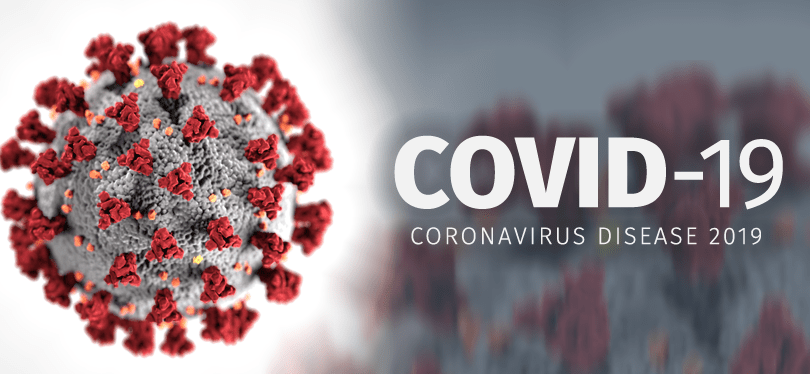
The world has been defiled by SARS-CoV-2. This is the virus that causes COVID-19. Let’s look at the following quote in the National Review from March 14, 2020:
What does “ten times more lethal” mean?—the math is simple. If 40 million Americans get the seasonal flu, a 0.1 percent fatality rate means 40,000 deaths. If 40 million Americans get the new coronavirus, a 1 percent fatality rate means 400,000 deaths.
This has been proven accurate. As of May 30, 2021, nearly 34 million Americans have gotten the coronavirus with 600,000 deaths. So it’s more than a 1 percent fatality rate.
Deaths in the US
UPDATE: May 27, 2020—It’s taken 4 months for SARS-CoV-2 to kill 100,000 Americans.
UPDATE: July 5, 2020—It’s taken 6 months for SARS-CoV-2 to kill 131,000 Americans.
UPDATE: September 18, 2020—It’s taken 8 months for SARS-CoV-2 to kill 200,000 Americans.
UPDATE: November 17, 2020—It’s taken 10 months for SARS-CoV-2 to kill 250,000 Americans.
UPDATE: December 13, 2020—It’s taken 11 months for SARS-CoV-2 to kill 301,278 Americans.
UPDATE: January 2, 2021—It’s taken 1 year for SARS-CoV-2 to kill 350,853 Americans.
UPDATE: January 17, 2021—It’s taken 13 months for SARS-CoV-2 to kill 400,031 Americans.
UPDATE: February 4, 2021—It’s taken 14 months for SARS-CoV-2 to kill 454,392 Americans.
UPDATE: February 20, 2021—It’s taken 14.5 months for SARS-CoV-2 to kill 500,291 Americans.
UPDATE: March 25, 2021—It’s taken 15 months for SARS-CoV-2 to kill 550,726 Americans.
UPDATE: May 30, 2021—It’s taken 17 months for SARS-CoV-2 to kill 600,067 Americans.
UPDATE: July 21, 2021—It’s taken 19 months for SARS-CoV-2 to kill 615,128 Americans.
UPDATE: September 21, 2021—It’s taken 21 months for SARS-CoV-2 to kill 687,770 Americans.
UPDATE: October 1, 2021—It’s taken 22 months for SARS-CoV-2 to kill 706,114 Americans.
UPDATE: November 8, 2021—It’s taken 23 months for SARS-CoV-2 to kill 754,278 Americans.
UPDATE: December 19, 2021—It’s taken 2 years for SARS-CoV-2 to kill 806,273 Americans.
UPDATE: February 6, 2022—It’s taken 2.2 years for SARS-CoV-2 to kill 900,558 Americans.
UPDATE: April 24, 2022—It’s taken 2.4 years for SARS-CoV-2 to kill 990,208 Americans.
UPDATE: December 17, 2022—It’s taken 3 years for SARS-CoV-2 to kill 1,095,062 Americans.
To be continued.
2020, The Year of the Rat
The letter n on nCOVID-19 stands for novel, which means “new or unusual.”
April 21, 2020—See parts II and III, in which I break down the mysterious RatG13 and its relationship to SARS-CoV-2.
Let’s take a basic look at RaTG13. The following is from an article posted on bioRxiv, which has not been peer-reviewed:
The elevated synonymous mutations between SARS-CoV-2 and RaTG13, suggesting they underwent stronger purifying selection. Moreover, their nucleotide substitutions are enriched with T:C transition, which is consistent with the mutation signature caused by deactivity of RNA 3’-to-5’ exoribonuclease (ExoN). The codon usage was similar between SARS-CoV-2 and other strains in beta-coronavirus lineage B, suggesting it had small impact on the mutation pattern. In comparison of SARS-CoV-2 WIV04 with Bat-SARSr-CoV RaTG13, the ratios of non-synonymous to synonymous substitution rates (dN/dS) was the lowest among all performed comparisons, reconfirming the evolution of SARS-CoV-2 under stringent selective pressure.
The levels of genetic similarity between the 2019-nCoV and RaTG13 suggest that the latter does not provide the exact variant that caused the outbreak in humans, but the hypothesis that 2019-nCoV has originated from bats is very likely.
The problem is that nothing is certain. The natural host may be a bat, and studies indicate the virus needs an intermediate host to jump to humans. The intermediate host is missing, and if it’s found, it will rule out bio-engineering. The following is from the IJOS:
The genome nucleotide sequence identity between a coronavirus (BatCoV RaTG13) detected in the bat Rhinolophus affinis from Yunnan Province, China, and 2019-nCoV, was 96.2%, indicating that the natural host of 2019-nCoV may also be the Rhinolophus affinis bat. However, the differences may also suggest that there is an or more intermediate hosts between the bat and human.
Again, nothing is certain. This paper says that the differences between RaTG13 and SARS-CoV-2 suggest an intermediate host. This fits with the following quote from another paper which hasn’t been peer-reviewed titled Pangolin homology associated with 2019-nCoV. It says the probable origin of SARS-CoV-2 is the bat, yet no intermediate host has been found:
…like SARS-CoV and MERS-CoV(5), the bat is still a probable origin of the 2019-nCoV because the 2019-nCoV shared 96% whole genome identity with a bat coronavirus Bat-CoV-RaTG13 from Rhinolophus affinis from Yunnan Province(2). However, SARS-CoV and MERS-CoV usually pass into medium host like civets or camels before leaping to humans(4). It indicates that the 2019n-Cov was probably transmitted to humans by some other animals. Considering the earliest COVID-19 patient reported no exposure at the seafood market(6), finding intermediate host of 2019-nCoV is vital to block its transmission.
The article goes on to talk about a couple of dead pangolins discovered before the outbreak began in December 2019. In regard to pangolins (a scaly anteater), the following is from Wikipedia:
In February 2020, university researchers in China employing genomic sequencing found a 99% match between coronavirus found in pangolins and SARS-CoV-2, the virus responsible for the 2019–20 coronavirus pandemic. [7] Although a 99% similarity is not necessarily enough to link them, a subsequent whole-genome comparison found that the pangolin and human viruses in fact share only 90.3% of their RNA, thus ruling out the animals as a direct source.[8] The initial speculation about pangolins being the origin of the virus may have led to mass slaughters, similar to what happened to civets during the SARS outbreak.
Pangolins have been ruled out. This much is certain. No intermediate host has been found. But does this mean that RaTG13 could’ve been made in a laboratory? The following is from Science News:
COVID-19 coronavirus epidemic has a natural origin Date: March 17, 2020
Source: Scripps Research Institute
Summary: An analysis of public genome sequence data from SARS-CoV-2 and related viruses found no evidence that the virus was made in a laboratory or otherwise engineered.
According to the Scripps Research Institute, they’ve found no evidence of bioengineering. The following story from March 27 references a correspondence from Nature Medicine: https://www.msn.com/en-us/health/health-news/sorry-conspiracy-theorists-study-concludes-covid-19-is-not-a-laboratory-construct/ar-BB11Mi5h?li=BBnb7Kz. It mentions pangolins, and pangolins were ruled out as an intermediate host in February.
The following is from the National Science Review, March 3:
The SARS-CoV-2 epidemic started in late December 2019 in Wuhan, China, and has since impacted a large portion of China and raised major global concern. Herein, we investigated the extent of molecular divergence between SARS-CoV-2 and other related coronaviruses. Although we found only 4% variability in genomic nucleotides between SARS-CoV-2 and a bat SARS-related coronavirus (SARSr-CoV; RaTG13), the difference at neutral sites was 17%, suggesting the divergence between the two viruses is much larger than previously estimated. Our results suggest that the development of new variations in functional sites in the receptor-binding domain (RBD) of the spike seen in SARS-CoV-2 and viruses from pangolin SARSr-CoVs are likely caused by mutations and natural selection besides recombination. Population genetic analyses of 103 SARS-CoV-2 genomes indicated that these viruses evolved into two major types (designated L and S), that are well defined by two different SNPs that show nearly complete linkage across the viral strains sequenced to date. Although the L type (∼70%) is more prevalent than the S type (∼30%), the S type was found to be the ancestral version. Whereas the L type was more prevalent in the early stages of the outbreak in Wuhan, the frequency of the L type decreased after early January 2020. Human intervention may have placed more severe selective pressure on the L type, which might be more aggressive and spread more quickly. On the other hand, the S type, which is evolutionarily older and less aggressive, might have increased in relative frequency due to relatively weaker selective pressure. These findings strongly support an urgent need for further immediate, comprehensive studies that combine genomic data, epidemiological data, and chart records of the clinical symptoms of patients with coronavirus disease 2019 (COVID-19).
This article says the new variations seen in SARS-CoV-2 suggest mutations besides recombination. The branch of RaTG13, which I believe is SARS-CoV-2, could use a person as a carrier, spreading the virus, yet not making the person sick for a prolonged length of time. This allows the virus to spread undetected while the carrier remains highly contagious. yet not showing symptoms until much later. Those who test positive but are asymptomatic should be considered highly contagious and be isolated for an indefinite period of time.
Chinese research papers have flooded the scientific community, and they are contradictory. Different sources are claimed for RaTG13, and dates are not lining up (see part II). The idea of bioengineering is not far-fetched, especially in the time of artificial intelligence. Whatever the case, this pandemic is just another sign of the end times:
There will be great earthquakes, famines, and pestilences in various places, along with fearful sights and great signs from heaven. (Luke 21:11)
The labor pains will continue to grow in frequency and intensity.
2020 was the Year of the Rat, and that has been proven true. Chinese New Year 2021 is the Year of the Ox.
It is said that Ox ranks the second among the Chinese zodiacs because it helped the Rat but was later tricked by it. The myth goes that the Jade Emperor declared the order of zodiac signs would be based on the arrival orders of 12 animals. Ox could have arrived the first but it kindly gave a ride to Rat. However, when arriving, Rat just jumped to the terminus ahead of Ox, and thus Ox lost the first place. Year of the Ox 2021, 1973, 1985, 1997, 2009 Chinese Zodiac Ox (travelchinaguide.com)
Let’s practice social distancing, if not self-isolation. Let’s hide ourselves for a little while until the pestilence has passed.
Hell is real, and the only way to avoid this terrible fate is through Jesus Christ. In these last days, let’s accept Christ as Lord and savior and receive God’s promise of eternal life. Let’s obey God’s commandments knowing that no matter how we meet our end on this earth, we will be standing in the presence of God forever.
Blessed be the LORD, the God of Israel, from everlasting to everlasting.” Then all the people said, “Amen!” and “Praise the LORD!” (1 Chronicles 16:36)
Copyright Act of 1976 17 U.S.C. § 107 allows for the use of work that is used for comment, criticism, or education. FAIR USE: Some content displayed on this video/site may contain copyrighted material the use of which has not been specifically authorized by the copyright owner. This material has been made available in our efforts to advance understanding of political, democracy, and social justice issues, etc. This is under Fair Use with purpose to educate and inform the public.

 Futile World