Selah is a Hebrew word that’s used 74 times in the Bible—71 times in the Psalms and 3 times in Habakkuk chapter 3.
Some believe that Selah means forever, and some believe it means God has spoken. Strong’s Concordance says that Selah means to lift up. This mysterious Hebrew word Selah is a musical term that means repeat, and like the Psalms, some songs repeat and some don’t. We know that Habakkuk 3 is a song because at the end it says, “For the choirmaster, with stringed instruments.”
Let’s begin by looking at Psalms 42 and 43, which should be read consecutively. In these two Psalms, the word Selah is not present because three of the verses repeat on their own, so we don’t need to see the word Selah. Here’s the repeating verse:
Why are you downcast, O my soul? Why the unease within me? Put your hope in God, for I will yet praise Him for the salvation of His presence. (Psalm 42:5; see also verse 11 and 43:5)
Psalms 80 and 107 do the same thing.
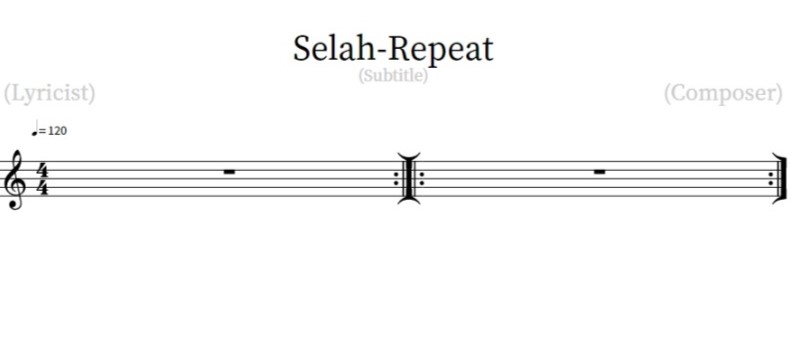
A repeat is the restatement of a passage, usually for emphasis. Selah is used when single verses or passages are to be repeated, such as we see in a musical phrase or poem. For example, Psalm 55 is structured in 3 passages. Passages 1 and 2 have the word Selah, but at the end of passage 3, Selah is not written. This can tell us to repeat passages 1 and 2, but not 3. In music, we might see Psalm 55 structured like this:
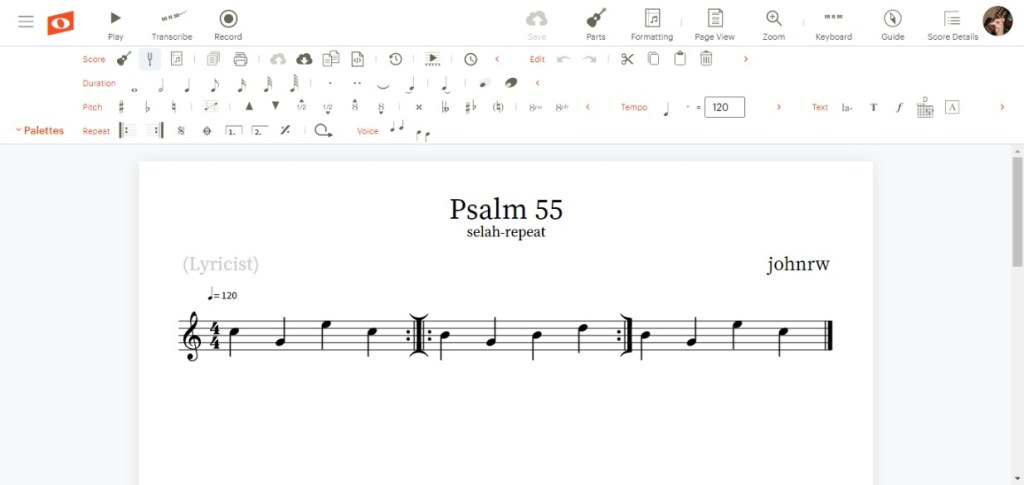
Psalms 4, 57, 76, and 88 have the same structure as Psalm 55.
Psalms 3, 46, and 77 are structured in 3 passages with repeats (selah) in all 3. So, in the third and final measure in the musical image above, we would see a repeat sign. Psalm 140 is structured in 4 passages with repeats (selah) in the first 3, but not the 4th.
Psalm 8 doesn’t have the word selah, but like a song that uses a certain key, it ends how it begins, in the tonic.
O LORD, our Lord, how majestic is your name in all the earth! (Psalm 8:9; see also verse 1)

 Futile World