
Alas that these evil days should be mine. —King Theoden of Rohan
J.R.R. Tolkien has been called the father of high fantasy. But not everything from The Hobbit and The Lord of the Rings is originally from the mind of Tolkien. We can see that some things he wrote were inspired by the Bible.
In the creation process, whether it’s literature, painting, or music, we might get inspiration from things we read, see, or hear. For example, great composers in history got inspiration from each other. In the early 18th Century, many composers in Europe were imitating the style of Jean Baptiste Lully, who in turn was influenced by Claudio Monteverdi.
The Bible and the apocrypha have some of the greatest stories ever written, and many great works of literature are inspired by these stories. Let’s take a look at some comparisons from The Hobbit and The Lord of the Rings to the Bible and the Apocrypha. Let’s begin with the title The Lord of the Rings.
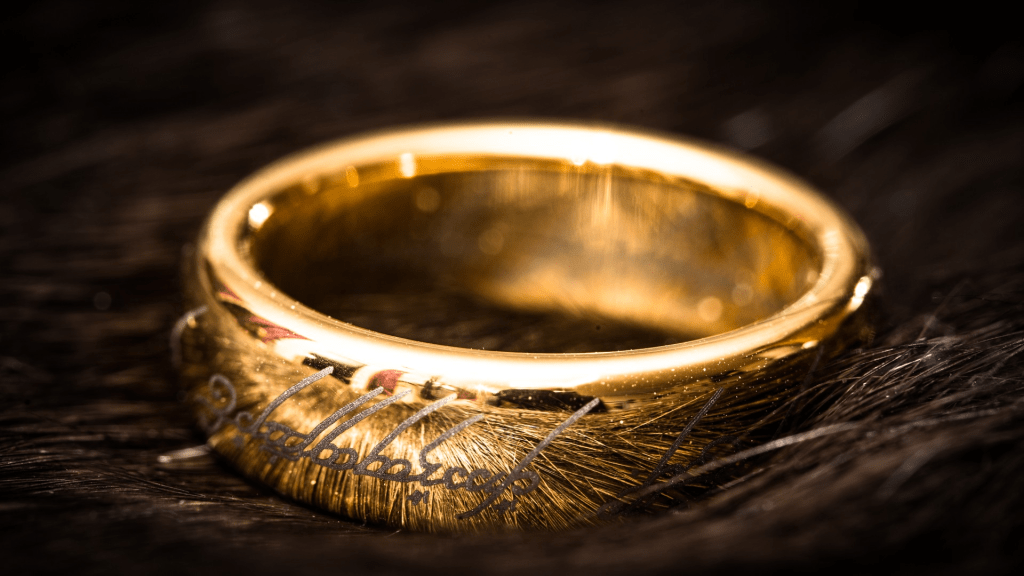
Tolkien might have gotten the idea for his title from Daniel 6:17. This scripture is in the context of sealing Daniel in the lion’s den with seals from signet rings. In this verse, some Bible translations say, “Rings of his lords.” The word his isn’t in the Hebrew, but this doesn’t make it incorrect. Other translations say, “Signet rings of his nobles”, “Rings of his nobles”, and “Signets of his lords”. Although these translations are technically correct and acceptable, the Catholic Bible, the New American Bible Revised Edition, gives us the most accurate translation:
To forestall any tampering, the king sealed with his own ring and the rings of the lords the stone that had been brought to block the opening of the den.
This translation says, “Rings of the lords.” Let’s remember that Tolkien was a Catholic and was most likely reading from the late 4th century Vulgate. In Daniel 6:17, the Vulgate uses the Latin word annulo, which means ring, not signet.
Aragorn, from The Return of the King, is a type of Christ. He becomes king and marries an elf princess, who might represent a Gentile bride. Jesus’s bride is a Gentile, the Church. In Genesis, Joseph marries Asenath, an Egyptian, and Ruth, a Moabite woman, marries Boaz, King David’s great-grandfather. Gandalf is a type of Christ as well. He comes to rescue and wage war riding on his white horse Shadowfax, the lord of horses. However, when Jesus Christ returns, his robe will be dipped in blood up to the horse’s bridle, and on his thigh is written King of kings and Lord of lords.
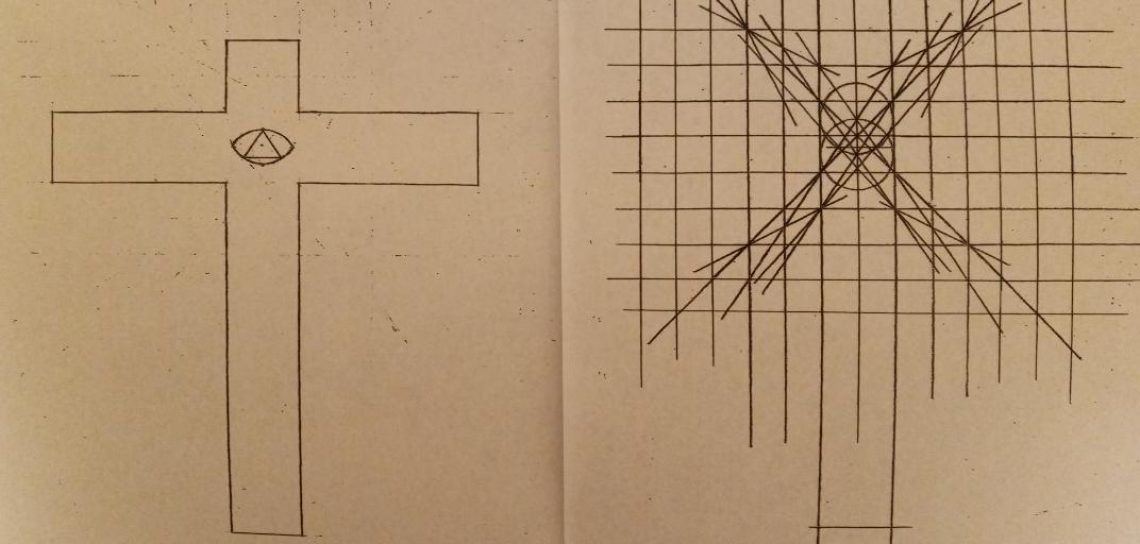
Sauron is a type of Satan and the antichrist with his one eye, and Mordor is a type of hell. In The Fellowship of the Ring, Gandalf chooses “the way of pain” instead of joining with the evil Saruman and Sauron. In Christ, we choose the way of pain instead of giving in to the pleasures of sin or selling out simply to avoid hardship. Bilbo Baggins can represent a born-again believer when he gives up the ring at Gandalf’s behest and begins his new journey, but he still struggles with the ring in his old age when he sees it around Frodo’s neck. This could represent carrying our cross and temptation. The elves rowing away to the Undying Lands at end of The Lord of the Rings might represent going to eternal life in heaven.
Tolkien uses the phrase son of extensively in regard to the dwarves’ ancestry. We see son of in the Bible in regard to the ancestry of the kings of Israel. We also see it in the ancestry of Jesus Christ in Matthew 1. Jesus, the Son of God, even calls himself the Son of Man. Jesus is also called the son of David, a descendant of David, according to the flesh.
The following scriptures from the book of Job are in the context of the search for wisdom. Searching for wisdom is compared to a miner searching for treasure. These verses might remind us of the dwarves when they’re mining, especially verse 4, which we see in the opening scene of The Hobbit:
“Surely there is a mine for silver and a place where gold is refined. Iron is taken from the earth, and copper is smelted from ore. Man puts an end to the darkness; he probes the farthest recesses for ore in deepest darkness. Far from human habitation he cuts a shaft in places forgotten by the foot of man. Far from men he dangles and sways.
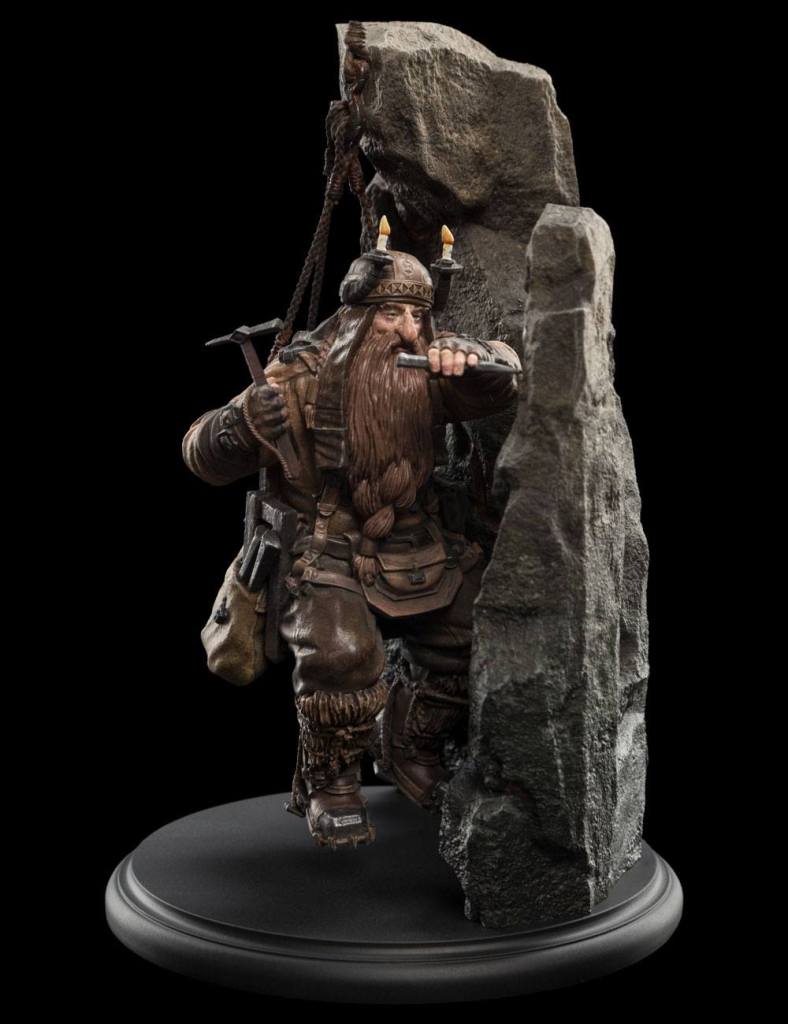
Food may come from the earth, but from below it is transformed as by fire. Its rocks are the source of sapphires, containing flecks of gold. No bird of prey knows that path; no falcon’s eye has seen it. Proud beasts have never trodden it; no lion has ever prowled over it. The miner strikes the flint; he overturns mountains at their base. He hews out channels in the rocks, and his eyes spot every treasure. He stops up the sources of the streams to bring what is hidden to light. (Job 28:1-11)
With true and wonderful words like these, who wouldn’t be inspired? So, let’s keep searching for wisdom, as it’s written,
There is an abundance of gold and pearls, but lips of knowledge are a precious thing. (Proverbs 20:15)
Gandalf refers to Smaug as a fire breathing dragon.
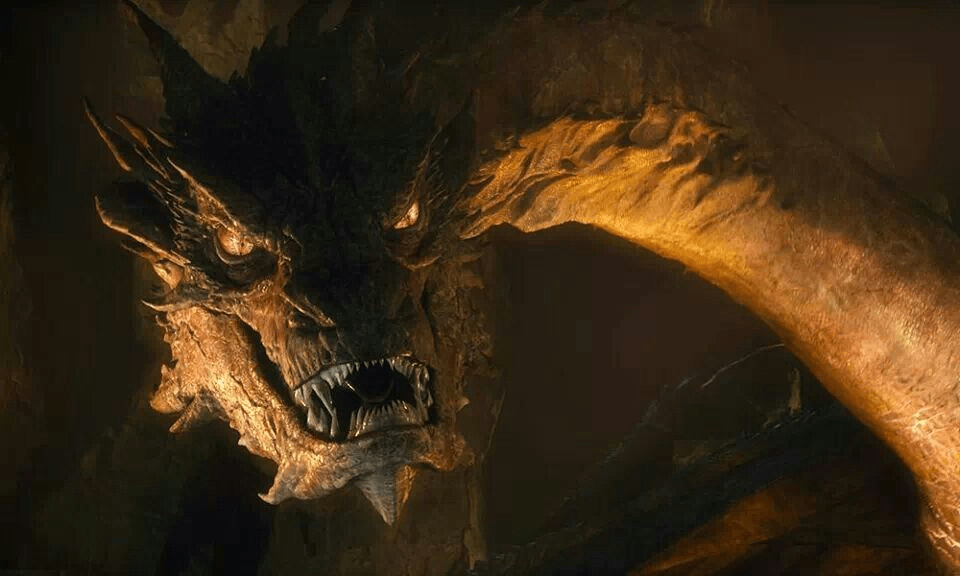
Let’s read about Leviathan:
His rows of scales are his pride, tightly sealed together. One scale is so near to another that no air can pass between them. They are joined to one another; they clasp and cannot be separated. His snorting flashes with light, and his eyes are like the rays of dawn. Firebrands stream from his mouth; fiery sparks shoot forth! Smoke billows from his nostrils as from a boiling pot over burning reeds. His breath sets coals ablaze, and flames pour from his mouth. (Job 41:15-21)
Leviathan is the king of proud beasts.
In Lord of the Rings, Gandalf tells Frodo that, “Many that live deserve death, and some that die deserve life.” Let’s go to the book of Ezekiel:
By lying to My people who would listen, you have killed those who should not have died and spared those who should not have lived. (Ezekiel 13:19)
In regard to elephants, let’s go to 1 Maccabees from the Apocrypha. These verses can remind us of the battle scene in The Lord of the Rings with the oliphuants. In 1 Maccabees 6, the king had 32 elephants trained for war:
30 His army numbered a hundred-thousand foot soldiers, twenty thousand cavalry, and thirty-two elephants trained for war. 31 They passed through Idumea and camped before Beth-zur. For many days they attacked it; they constructed siege engines, but the besieged made a sortie and burned these, and they fought bravely.
Battle of Beth-zechariah
32 Then Judas marched away from the citadel and moved his camp to Beth-zechariah, opposite the king’s camp. 33 The king, rising before dawn, moved his force hastily along the road to Beth-zechariah; and the troops prepared for battle and sounded the trumpet. 34 They made the elephants drunk on the juice of grapes and mulberries to get them ready to fight. 35 The beasts were distributed along the phalanxes, each elephant having assigned to it a thousand men in coats of mail, with bronze helmets on their heads, and five hundred picked cavalry. 36 These accompanied the beast wherever it was; wherever it moved, they moved too and never left it. 37 Each elephant was outfitted with a strong wooden tower, fastened to it by a harness; each tower held three soldiers who fought from it, besides the Indian driver.

38 The remaining cavalry were stationed on one or the other of the two flanks of the army, to harass the enemy and to be protected by the phalanxes. 39 When the sun shone on the gold and bronze shields, the mountains gleamed with their brightness and blazed like flaming torches. 40 Part of the king’s army spread out along the heights, while some were on low ground, and they marched forward steadily in good order. 41 All who heard the noise of their numbers, the tramp of their marching, and the clanging of the arms, trembled; for the army was very great and strong. 42 Judas with his army advanced to fight, and six hundred men of the king’s army fell. 43 Eleazar, called Avaran, saw one of the beasts covered with royal armor and bigger than any of the others, and so he thought the king was on it. 44 He gave up his life to save his people and win an everlasting name for himself. 45 He dashed courageously up to it in the middle of the phalanx, killing men right and left, so that they parted before him. 46 He ran under the elephant, stabbed it and killed it. The beast fell to the ground on top of him, and he died there. (1 Maccabees 6:30-46)
In the movie, Legolas heroically kills the oliphaunt. It doesn’t fall on him as it does Avaran. Alas, sometimes truth is better than fiction.
Eagles
When people would ask Tolkien why the Fellowship just didn’t fly on the Eagles to Mordor, he would reply, “Shut up!” Let’s answer this question. In Luke 17:37 from the Vulgate, the scripture uses the Latin word aquilae, which means eagle:
qui dixit eis ubicumque fuerit corpus illuc congregabuntur aquilae
He said to them, “Where the body is, there the eagles will gather.”
Many Bible translations use the word vulture instead of eagle. The original Greek word is aetoi, which means eagle. The rescue from Mordor by the eagles in The Lord of the Rings is a picture of the rapture of the body of Christ, which will happen during a time of great tribulation under the world reign of the antichrist. Jesus Christ will appear and send out his angels to gather the faithful, those of us who are alive who are left from this persecution. In The Hobbit and The Lord of the Rings, the eagles only come to the rescue when there’s no other way out or when there’s no hope left.

It will be the same in the final seven years of human history.
Literature and movies are entertaining, but we don’t need to escape reality into fantasy worlds or augmented reality. But while we enjoy these things, let’s stay sober and keep our eyes fixed on the world to come. If we want to journey to the real Undying Lands, the new Jerusalem, all we have to do is accept Jesus Christ as Lord and savior and obey God’s commandments. Let’s avoid the fate of eternal destruction by receiving God’s promise of eternal life through Jesus Christ. Doesn’t everyone want to live forever? Truth is way better than fiction.
Copyright Act of 1976 17 U.S.C. § 107 allows for the use of work that is used for comment, criticism, or education. FAIR USE: Some content displayed on this video/site may contain copyrighted material the use of which has not been specifically authorized by the copyright owner. This material has been made available in our efforts to advance understanding of political, democracy, and social justice issues, etc. This is under Fair use with purpose to educate and inform the public.

 Futile World